


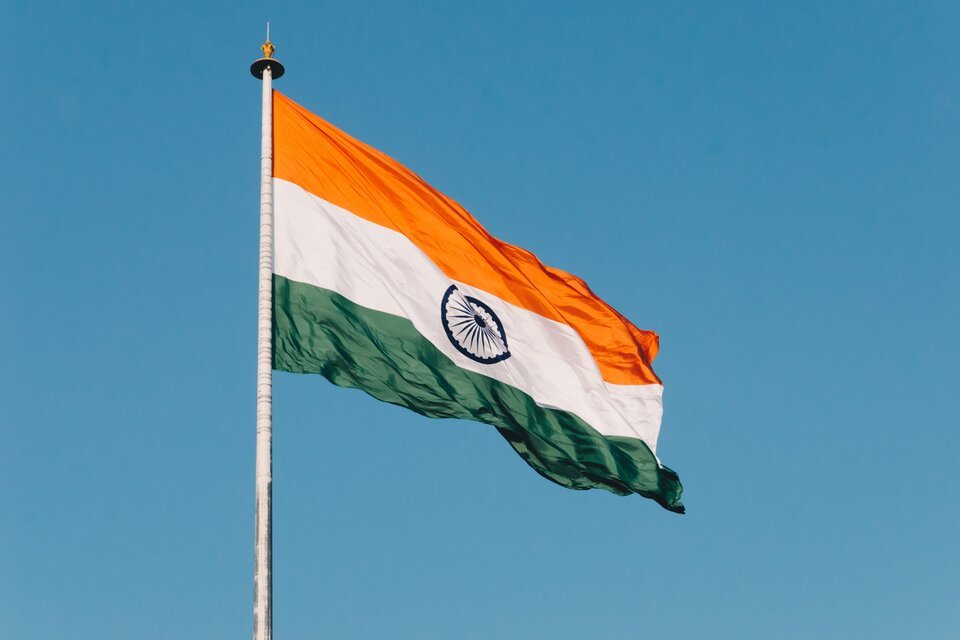

- The Foreign Trade Minister visits New Delhi to officially start negotiations on an ambitious new free trade agreement with the world’s largest democracy.
- The deal will be of tremendous benefit to both countries and could increase our total trade by up to £ 28 billion a year by 2035 and UK wages by up to £ 3 billion.
- The visit demonstrates Britain’s inclination to the Indo-Pacific and kicks off the “5 Star Year of Trade” with plans to open negotiations with Canada, Mexico and the Gulf and secure entry into the £ 8.4 trillion CPTPP trading bloc.
The UK and India will begin negotiations on an ambitious free trade agreement at an event in New Delhi today (Thursday 13 January).
Foreign Trade Minister Anne-Marie Trevelyan will meet with her counterpart, Indian Trade and Industry Minister Piyush Goyal, to officially start talks on an agreement that could bring enormous benefits to both countries.
India is one of the largest and fastest growing economies in the world, and a bold new deal would put UK companies at the top of the queue to supply India’s growing middle class, which is set to grow to a quarter of a billion consumers by 2050. India is set to become the third largest economy in the world by 2050, with a larger population than the US and EU combined.
A deal has the potential to nearly double UK exports to India, increase our total trade by up to £ 28 billion a year by 2035, and raise UK wages by up to £ 3 billion. Investments by Indian companies are already securing 95,000 jobs across the UK.
The UK wants a deal that will break down business and trade barriers with India’s £ 2 trillion and 1.4 billion consumer market, including lowering tariffs on exports of UK-made cars and Scottish whiskey.
An agreement with India would be a big step forward in Britain’s strategy of directing trade to the Indo-Pacific, where half the world’s population lives and 50% of global economic growth. A new economic partnership with India, along with British membership in the massive Asia-Pacific trade bloc, CPTPP, will create a pillar in the region that supports free and fair trade.
Prime Minister Boris Johnson said:
A trade deal with India’s booming economy offers tremendous benefits to UK businesses, workers and consumers. As we take our historic partnership with India to the next level, the UK’s independent trade policies create jobs, raise wages and drive innovation across the country.
The UK has world-class companies and expertise that we can rightly be proud of, from Scottish whiskey distilleries to financial services and cutting edge renewable technology. We are taking advantage of the opportunities presented by the growing economies of the Indo-Pacific to consolidate our place on the global stage and to create jobs and growth domestically.
Foreign Trade Minister Anne-Marie Trevelyan said:
An agreement with India is a golden opportunity to put UK businesses at the top of the queue as the Indian economy continues to grow rapidly. By 2050, India will be the third largest economy in the world with a middle class of nearly 250 million buyers. Our aim is to enter this huge new market for our great UK producers and manufacturers in a wide variety of industries, from food and beverage to services to automotive.
As an independent, deal-making nation, the UK broadens our economic horizons and forges stronger partnerships with the world’s fastest growing economies. India marks the start of our ambitious 5-Star Year of UK Trade and will show how the deals we negotiated will boost the economies of all nations and help level all regions of the UK.
A UK-India free trade agreement would bring several advantages, including:
- We play a key role in our drive to double trade with India by 2030 – and fuel the growth of our trade relationships, which exceeded £ 23 billion in 2019.
- Breaking Barriers to UK Exports – The removal of tariffs alone would increase exports to India by as much as £ 6.8 billion and secure tens of thousands of jobs across the UK. Major UK exports like Scottish whiskey and automobiles are currently subject to huge tariffs of 150% and 125% respectively.
- Boost the UK – DIT analysis shows that a trade deal with India could boost the economies of all nations and regions in the UK. For example, nearly 30,000 people in the West Midlands were employed by Indian investment in 2019, and the region could see a massive surge of up to £ 300 million with opportunities for automobile and parts manufacturers.
- Investing in UK Jobs – International investments by Indian companies are already securing 95,000 jobs across the UK and could grow with a new trade deal.
- Boosting Green Industries in the UK – The Government of India plans to install 175 GW of renewable energy capacity by 2022 and much more in the coming decades. Britain’s world leader in renewable energy should benefit from an agreement that breaks down barriers – like import tariffs of up to 15% on wind turbine parts from the UK.
Lord Karan Bilimoria, CBI President, said:
The CBI is pleased to announce the start of FTA negotiations between the UK and India. With India, a rapidly moving global economic superpower, this trade deal may usher in a new era of partnership and pave the way for significant trade and investment opportunities for British and Indian companies. To take full advantage of its growth opportunities, the UK needs to focus on the areas that will drive our future economic success, such as collaborative innovation and stronger regulatory focus. Above all, trade is a central instrument for economic growth and prosperity across all regions and nations.
Mike Hawes, Chief Executive of the Society of Motor Manufacturers and Traders (SMMT) said:
The automotive industry supports fair and balanced trade deals with both new and established markets. India is one of the fastest growing global markets with increasing demand for personal mobility and long-term plans for the transition to electric vehicles. This offers great opportunities for UK auto companies that have already proven attractive to Indian investments due to their global competitiveness, diversity and expertise. The key to any future trade relationship will be the gradual removal of tariffs, improved trade facilitation and the removal of other barriers to trade, which can be very complex and arduous.
Richard Heald OBE, Chair of the UK-India Business Council Group, said:
UKIBC warmly welcomes the start of these important negotiations. In particular, the breadth and ambition described, which cover goods and services, especially the IP-rich, digitally controlled services where Great Britain and India already excel. It is important – for businesses and consumers – when the world’s fifth and sixth largest economies negotiate a free trade agreement. India is an increasingly attractive travel destination and as the opportunities in India grow, a free trade agreement will make it easier for UK businesses to trade and invest there.
The first round of negotiations is expected to begin next week – the fastest start of formal talks between negotiating teams in the UK after a start.
During her visit to India, the Minister for International Trade will also chair a meeting of the UK-India Joint Economic and Trade Committee to review how companies in both countries are benefiting from existing market access obligations under the recently agreed enhanced UK-India trade partnership May by Prime Minister Boris Johnson and Indian Prime Minister Narendra Modi.
She is also expected to meet with Indian Foreign Minister Subrahmanyam Jaishankar, Finance Minister Nirmala Sitharaman and Environment Minister Bhupender Yadav to discuss broader bilateral cooperation.
Notes for editors:
- Computable General Equilibrium (CGE) models from the Department for International Trade show that real wages (wages at today’s prices) could rise by as much as 0.34% as a result of a free trade agreement between the UK and India, which equates to around 3.0 billion annually in 2019. Level, as workers benefit from higher productivity in the economy.